Choosing a Solar Installer in Geelong: 7 Questions to Ask
Solar panels and batteries are meant to work for 20 years or more, so the company you choose matters as much as the equipment. Our team has been installing across Geelong, the Surf Coast and the Bellarine since 2011, and a large share of our maintenance work is on systems whose original installer has gone. These are the seven questions we would ask if we were buying a system ourselves.
The short version
Choose a local company that will still be here, equipment from manufacturers with real service in Australia, and an installer who asks about your home before quoting a size. If a price seems too good to be true, it probably is.
1. Does the price seem too good to be true?
If it does, it probably is. A very cheap quote usually saves money somewhere you cannot see on installation day: lower-grade parts, rushed work, or a business that will not be around when you need the warranty. Solar is not the cheapest investment in the world, so compare what each quote includes, not just the bottom line. Our Geelong price guide shows typical local prices, so you know what a fair quote looks like.
2. How long have they been installing locally, and will they still be here?
Ask how long the company has been installing in your area, and whether its own staff do the work. Only a handful of Geelong solar companies, ours included, have been installing for around 15 years. Many others come and go within a few years, and when an installer closes, its workmanship warranty closes with it.
Choose a local company you can still call in ten years for a Wi-Fi reconnect, a fault, a panel clean or a system check.
3. Does the manufacturer have real service in Australia?
Your panels, inverter and battery each carry a manufacturer’s warranty, and each warranty is only as good as the company behind it. Ask whether the brand has an Australian office and a service team on the ground here, not just a website. Some brands that were once well regarded are now down to one or two service people in the whole country, which can mean long waits when something fails.
Ask the same about panels: is the brand reputable, with a real Australian presence?
4. Where does the equipment come from?
Ask whether the installer buys through established Australian wholesalers or imports equipment directly. Equipment bought through a wholesaler has a local supply chain behind it, which gives you another place to turn for warranty support if the installer or importer disappears.
5. What happens if the installer or the manufacturer is gone?
Our maintenance team carries out more than 200 jobs a year, and about two thirds are fault finding, inverter replacements and what we call “orphan systems”. There are two common kinds:
- No one left to call. The installer or the manufacturer no longer exists, so there is no one to honour the warranty.
- Never properly connected. The paperwork was never finished, so the system was never approved by the local electricity network. Before it can be connected it usually has to meet today’s standards, which can be a costly surprise for the owner.
Choosing well at the start is the cheapest way to avoid both.
6. Did they ask about your home, or quote a standard size?
For about six years, 6.6 kW was the size nearly everyone was sold. There is no one-size-fits-all. A good installer asks first: how much power you use and when, whether lower bills, blackout protection or a smaller environmental footprint matters most, and whether a battery or an electric car is in your plans. There is no right or wrong reason to go solar, but your answers should shape the design.
Thinking about storage too? Our battery size calculator gives a first estimate in about a minute.
7. Will they show you the finer details?
Ask to see photos of recent installs, and look past the panels. The details tell you how a company works:
- conduits run inside the walls rather than down the outside of the house
- equipment mounted level, with a concrete slab put down where it is needed
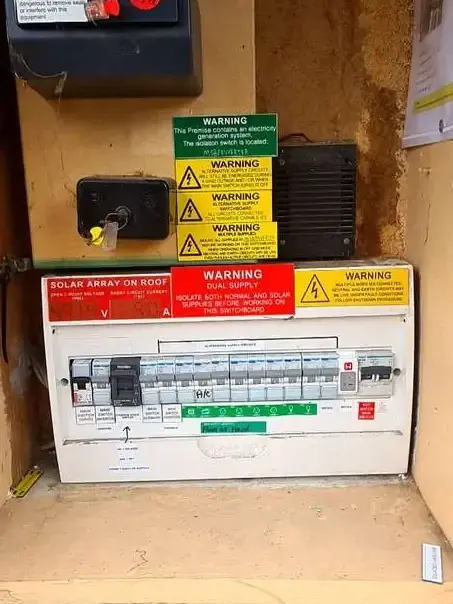
- a neat, clearly labelled switchboard
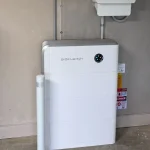
- the inverter or battery placed where it is best for you, even if that is further from the switchboard and more work for the installer
How we would do it
Get two or three quotes, ask each company these seven questions, and compare what you are getting, not just the price. Once your system is installed, we are your go-to for life, whether you need us six months or fifteen years later. We won’t install anything we don’t back up, and we handle warranty claims with the manufacturer for you.
Common questions
How do I know if a solar quote is too cheap?
Compare it with typical local prices, such as our Geelong price guide, and check what is included: the panel, inverter and battery brands, who does the installation, and the warranties. If one quote is far below the others, ask what is different.
What is an orphan solar system?
A system whose installer or manufacturer no longer exists, or one that was never properly connected to the electricity network because the paperwork was not finished. Our maintenance team can inspect it, fix faults and, where needed, bring it up to current standards.
Why does it matter if a manufacturer has an Australian office?
Warranty claims go through the manufacturer. A brand with a real service team in Australia can assess and replace faulty equipment far faster than one with little or no local presence.
Is 6.6 kW the right size solar system?
Not always. It was the standard size sold for years, but the right size depends on your power use, your roof, your budget and plans such as a battery or an electric car. We size each system from your bills and goals.
Who handles warranty claims if something goes wrong?
With Velocity Solar, our team does. We handle warranty claims with the manufacturer on your behalf, and we only install brands we are prepared to back.